
 Auctions
 Tickets
 Payments
 Event Website
 Donations & Paddle Raise
 Communications
 Reports & Analytics
 Raffles & Sales
 Sponsorship
 Mobile Apps
Fundraising events are asking more of organizations than ever before. The pressure to grow revenue without growing overhead leaves many nonprofits wondering how to expand their reach without expanding their staff.
One of the most effective and often underused answers is already in your orbit: ambassadors.
What Ambassadors Actually Do (And What They Don't)
Before you recruit someone for this role, remember, ambassadors are not there to lighten your load. Many organizations expect or hope that ambassadors will save staff time. They don't.
Ambassadors are there to do something you genuinely cannot do on your own: access their networks and bring new people into your orbit. Your job is to support them so thoroughly that activating those networks feels easy. It's not about efficiency. It's about growth and reach.
That reframe changes how you structure the relationship. Here's what real support actually looks like.
Choose Connectors, Not Just Board Members
Your best ambassadors might not be on your board at all.
Board membership and ambassador effectiveness are not the same thing. The person you want in this role is someone who is genuinely enthusiastic about your mission, has an active network they're willing to tap, and - this part matters more than people realize - actually has the time to do the job well.
Some of your most devoted board members may be stretched thin with their careers, family obligations, or other volunteer commitments. A reluctant ambassador who sends two half-hearted emails is not going to move the needle. A passionate donor, a dedicated volunteer, or a community connector who isn't on your board but loves what you do? That person can be a powerhouse.
Quality over quantity. Every time.
That said, your board should absolutely be represented among your ambassadors. They should be your loudest and proudest cheerleaders. But casting a wider net means you're recruiting for fit, not just for title.
Think about the people in your orbit who light up when they talk about your work. Who already refers people to your organization without being asked? Who has a wide, warm, trusted network? Those are your ambassadors. Board seat or not.
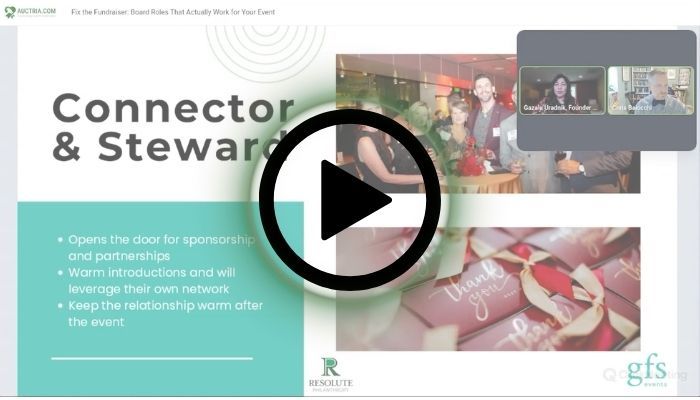
For a deeper look at how to match board members specifically to event roles that play to their strengths, check out Auctria's webinar replay: Fix the Fundraiser: Board Roles That Actually Work for Your Event. It's a practical breakdown of how to stop square-pegging board members into roles that don't fit them.
Start Earlier Than You Think You Need To
Four weeks out? Six weeks out? Almost too late.
Start recruiting your ambassadors three months before your event. Your ambassadors need time to think through whether they can take this on, review the job description, identify who they want to invite, and actually make contact. In a world where everyone's inbox is overflowing, follow-up takes time. Give them room to do this right.
Three months sounds like a lot until you're two weeks out and scrambling.
Give Them a Real Job Description
Write it down. Even if it seems obvious to you, put it on paper.
People are much more likely to say yes - and follow through - when they know exactly what they're signing up for. A vague ask of "help us spread the word" is far less compelling than "invite 10 people from your network to attend our spring luncheon, and we'll give you everything you need to do it."
Give Them the Tools to Actually Do the Work
A shared digital folder is your best friend here. Stock it with email templates, social media graphics, talking points, and suggested messaging. Make it as easy as possible for them to show up and deliver.
And if you can refresh that content throughout the campaign? Even better. New content keeps them engaged and gives them reasons to keep reaching out.
This is the approach that consistently produces results. The organizations that invest in thorough ambassador toolkits routinely see higher attendance, more new faces in the room, and stronger event revenue.
Stay in It With Them
Check in. Ask how it's going. Answer their questions. This is not a set-it-and-forget-it strategy. Your ambassadors need follow-up and support throughout the process. Like all good fundraising relationships, this one requires attention.
Take It Further with Peer-to-Peer Lite
Once you've built a strong ambassador program, you have a natural foundation for something even more powerful: peer-to-peer fundraising at the ambassador scale.
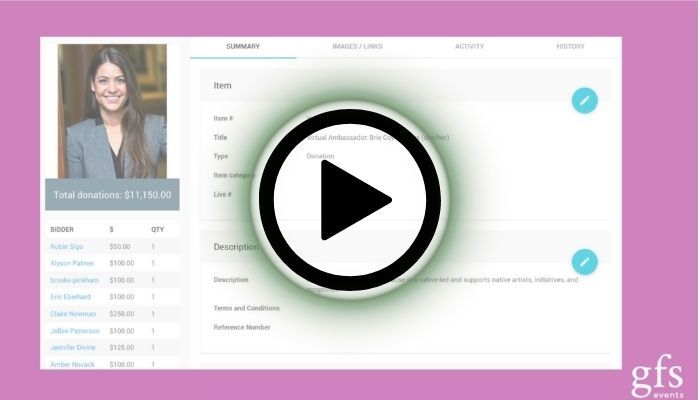
Auctria offers a streamlined approach to peer-to-peer fundraising built for exactly this kind of ambassador model. You can empower your supporters to become fundraisers for your cause, encouraging their networks not just to attend, but to donate. Add a donation tracker or thermometer to their individual pages, making it easy to track pledges and celebrate progress publicly.
It's a lighter, more accessible version that works beautifully in the ambassador context - and it's already included in your Auctria license at no extra cost. Organizations are using it effectively right now to extend the reach of their events beyond ticket sales.
Auctria's Unique Events page showcases real examples of how organizations have put this to work, including peer-to-peer ambassador fundraising and competitive formats like a peer-to-peer chili cook-off. You can also see it in action with our interview with GFS Events on the Peer to Peer Fundraising: Best practices on engaging your donors
A Natural On-Ramp for Nervous Board Members
The ambassador role is a great entry point for board members who are nervous about fundraising.
If you have board members who break into a cold sweat at the word "ask," the event ambassador role is the on-ramp they've been waiting for. You can tell them honestly: all I need you to do is invite people to come to the event. The event itself will do the asking.
That's a genuine invitation to participate in fundraising without the pressure of a direct solicitation. And once they see how their network responds? Once they experience the satisfaction of bringing new people into the room who end up connecting with your mission? They start to see what's possible for them as fundraisers.
It's a tiptoe towards the deep end. And sometimes that's exactly what someone needs.
The Bottom Line
Peer invitations move people in ways that mass communications simply can't. Your email blast, your social posts, your beautifully designed save - the-date - none of those carry the weight of a message from someone your prospect already knows and trusts.
Set your ambassadors up with clear expectations, a real job description, the right tools, and consistent support. Give them the option to fundraise on your behalf, not just recruit. Then watch what happens to your event attendance, your donor pipeline, and your revenue.
Your network has limits. Theirs doesn't.
For more on structuring your event for maximum impact, see our article on the 8-part emotional arc of a fundraising event program. And once your ambassadors bring new people in the room, Auctria's breakdown of the Big Five types of spenders at fundraising events will help you make the most of every attendee.